
Reducing Claims Backlogs Without Hiring Additional Staff
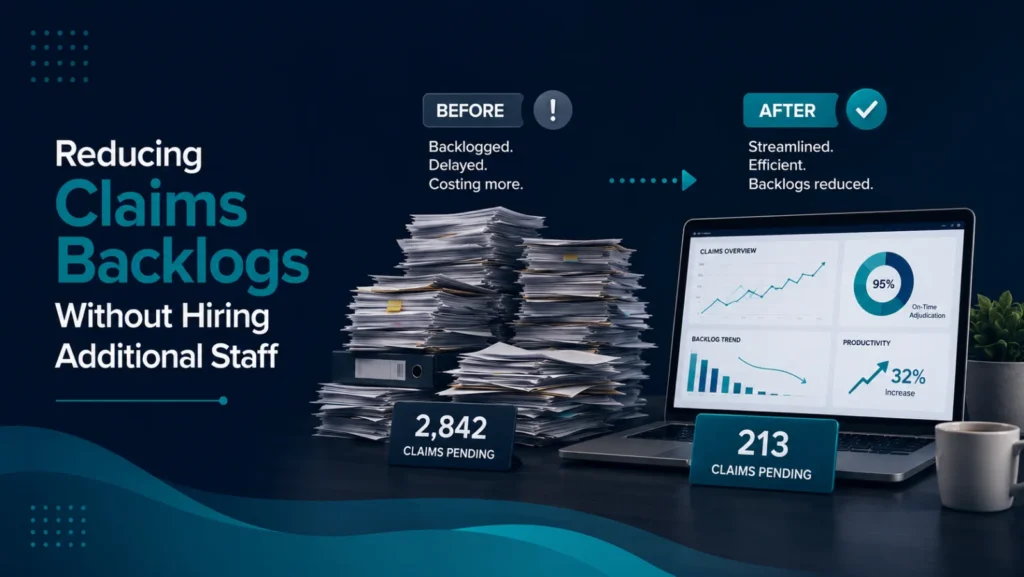
Claims backlogs are among the most common operational challenges facing health plans and third-party administrators (TPAs). Whether driven by membership growth, staffing shortages, system limitations, or seasonal fluctuations, growing claim inventories can quickly impact provider satisfaction, member experience, and regulatory compliance.
While the instinctive response is often to hire additional staff, adding headcount is not always the most effective—or immediate—solution. In many cases, organizations can significantly reduce claims backlogs by optimizing workflows, leveraging automation, and improving operational visibility.
Understanding the Root Cause
Backlogs are rarely caused by a single issue. They often result from a combination of factors that create bottlenecks throughout the claims lifecycle. Common contributors include:
- Manual processing requirements
- Inconsistent workflows
- System configuration issues
- Insufficient workload balancing
- Incomplete claims submissions
- Staff turnover and training gaps
- Limited reporting visibility
Before organizations can eliminate a backlog, they must first understand what is causing it.
Improve Queue Management
Not all claims require the same level of attention. Organizations should establish clear prioritization models that identify:
- High-dollar claims
- Aging inventory
- Regulatory turnaround requirements
- Provider-sensitive claims
- Claims requiring manual intervention
Proper queue segmentation helps teams focus resources where they create the greatest impact.
Identify Manual Touchpoints
Many claims organizations continue to rely on manual processes that increase processing times. Areas frequently suitable for automation include:
- Eligibility verification
- Data validation
- Routing workflows
- Duplicate claim detection
- Provider correspondence
Even small workflow improvements can significantly increase throughput.
Optimize Existing Resources
Often, claims teams possess the capacity needed to address inventory challenges but lack visibility into workload distribution. Operational leaders should evaluate:
- Productivity benchmarks
- Work allocation methods
- Team specialization
- Performance metrics
- Cross-training opportunities
Better resource alignment often yields immediate improvements without increasing staffing costs.
Consider Flexible Support Models
When temporary assistance is needed, staff augmentation can provide targeted expertise without the long-term commitments associated with permanent hiring. Flexible workforce solutions allow organizations to quickly address inventory spikes while maintaining operational efficiency.
The Bottom Line
Reducing claims backlogs requires more than adding people. By addressing root causes, improving workflows, leveraging technology, and strategically utilizing resources, organizations can improve throughput, reduce costs, and maintain service excellence.
Netmark helps healthcare organizations identify operational bottlenecks and implement sustainable solutions that improve claims performance and reduce inventory challenges.