
The Hidden Costs of Operational Inefficiencies in Claims Processing
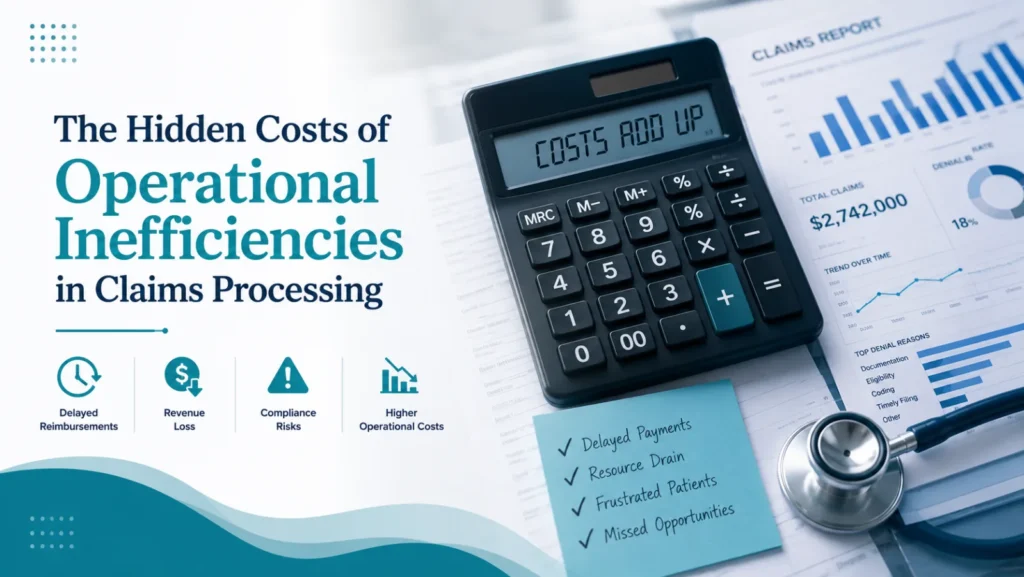
Operational inefficiencies in claims processing rarely announce themselves. Instead, they quietly erode margins, strain staff, and frustrate clients. Many TPAs and healthcare organizations believe inefficiency is simply “the cost of doing business,” but the reality is far more costly—and far more fixable.
Understanding the true cost of inefficiencies is the first step toward building scalable, resilient claims operations.
What Are Operational Inefficiencies in Claims Processing?
Operational inefficiencies occur when workflows, systems, or staffing models create unnecessary delays, rework, or errors. In claims environments, these inefficiencies often stem from:
- Manual workarounds
- Poor system configuration
- Inconsistent processes
- Lack of automation
- Misaligned staffing levels
- Misaligned adjudication platform
Individually, these issues may seem manageable. Collectively, they compound into significant financial and operational risk.
The Direct Costs You Can Measure
Some inefficiencies are easy to identify because they show up on financial statements:
- Rework costs from claim corrections and resubmissions
- Overtime expenses to manage backlogs
- Increased staffing needs to compensate for poor productivity
- Technology costs tied to underutilized or misconfigured systems
While these costs are visible, they often represent only a fraction of the total impact.
The Hidden Costs That Go Unnoticed
The most damaging inefficiencies are frequently invisible:
- Delayed adjudication leading to client and provider dissatisfaction
- Compliance exposure caused by inconsistent processes
- Employee burnout and turnover
- Lost growth opportunities due to limited scalability
- Reduced auto-adjudication rates, increasing manual handling
- Call center and triage teams overloaded by provider and client calls and requests
Over time, these hidden costs undermine service levels, client retention, and long-term profitability.
Why Inefficiencies Multiply During Growth
Growth magnifies inefficiency. When claim volumes increase, small workflow issues quickly turn into major bottlenecks. Without optimized processes, scaling often leads to:
- Larger backlogs
- Increased error rates
- Reactive hiring instead of strategic planning
This is why many organizations feel “stuck” despite growing revenue.
How Operational Assessments Create Real Savings
An independent operational assessment helps organizations:
- Identify root causes instead of symptoms
- Measure productivity accurately
- Optimize workflows before adding staff
- Improve system configuration and automation usage
By addressing inefficiencies early, health plans and TPAs can scale without sacrificing accuracy or service quality.
What Is the Biggest Hidden Cost in Claims Operations?
The biggest hidden cost is rework. Reprocessing claims consumes staff time, delays payments, increases compliance risk, and reduces overall productivity—often without being clearly tracked.
Frequently Asked Questions
How do operational inefficiencies affect claims costs?
They increase rework, delay adjudication, drive overtime expenses, and reduce staff productivity.
Can inefficiencies be fixed without hiring more staff?
Yes. Process optimization and automation often deliver greater ROI than increasing headcount.
When should a health plan or TPA conduct an operational assessment?
Before scaling, during growth periods, or when backlogs and errors increase.
Take the Next Step
Before inefficiencies scale with your business, assess them. An independent review can uncover opportunities for immediate and long-term improvement.